 English
 French
Best_tactical_methods_for_perfectly_tailoring_custom_trailing_stop-loss_metrics_within_your_Kells_Fi
Best Tactical Methods for Perfectly Tailoring Custom Trailing Stop-Loss Metrics Within Your Kells Fintrix Profile
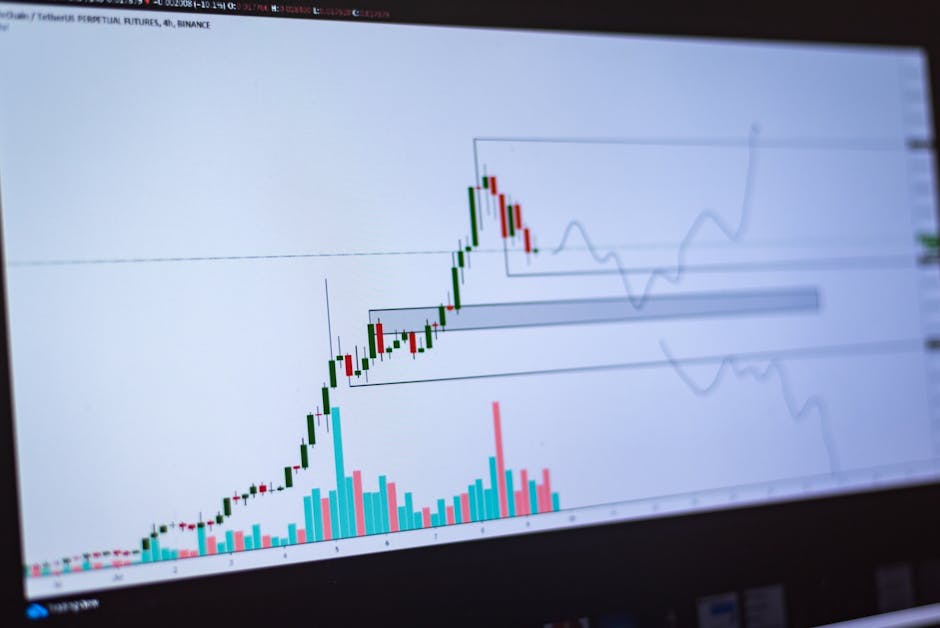
Understanding Core Trailing Stop-Loss Mechanics in Kells Fintrix
Tailoring a trailing stop-loss within your https://kellsfintrix.it.com/ profile demands a shift from generic settings to asset-specific logic. The platform allows granular control over activation thresholds, step sizes, and retracement triggers. Begin by analyzing historical price volatility of each instrument. For highly volatile assets like crypto or tech stocks, use wider trailing distances to avoid premature exits. For stable pairs, tighten the gap to lock profits faster. The key is matching the stop distance to the average true range (ATR) of the asset, not a fixed percentage.
Kells Fintrix supports both absolute value trailing and percentage-based trailing. Absolute value works best for low-priced assets where a 1-cent move is significant. Percentage trailing adapts to price levels, making it ideal for long-term positions. Test each method on historical data using the platform’s backtesting module. Set the activation threshold at 2-3% above entry for longs, then trail at 0.5-1% increments. This prevents noise from triggering the stop while capturing trend reversals effectively.
Advanced Tactical Strategies for Custom Metrics
Volatility-Adjusted Trailing
Use the Kells Fintrix indicator suite to calculate real-time ATR. Set your trailing stop at 1.5x ATR for day trading and 2.5x ATR for swing trading. This dynamically adjusts to market conditions. For example, if ATR is $0.50, a 1.5x trailing stop equals $0.75. As volatility shrinks, the stop tightens automatically, preserving capital. Pair this with a momentum filter-only activate the trail when the asset’s 14-period RSI is above 50 for longs or below 50 for shorts.
Step-Based Retracement Logic
Instead of a continuous trail, program discrete steps. For every $1.00 profit increase, move the stop up by $0.50. This locks in profits while allowing pullbacks within the step. In Kells Fintrix, configure this under “Custom Step Parameters.” Set the profit step to 2% and the stop step to 1%. This method works well in trending markets with occasional retracements. Backtest with 1000+ trades to find optimal step ratios for your asset class.
Optimizing Metrics with Multi-Timeframe Analysis
Do not rely on a single timeframe for stop placement. Use the 15-minute chart to identify immediate support/resistance and the 1-hour chart to gauge trend strength. In Kells Fintrix, overlay both timeframes in the same profile using dual-pane layouts. For a trailing stop, set the initial trigger based on the higher timeframe (e.g., 1-hour ATR) and the trailing step based on the lower timeframe (e.g., 15-minute price action). This reduces whipsaws during intraday noise.
Incorporate volume profile into your trailing logic. If a stop is placed near a high-volume node, it may trigger due to liquidity grabs. Adjust the trailing distance to sit 0.5x ATR below the nearest high-volume node. Kells Fintrix allows you to import volume profile data and link it to stop parameters. Test this on 50 random trades to validate effectiveness before applying to live capital.
FAQ:
How do I set a trailing stop-loss in Kells Fintrix?
Navigate to the “Risk Management” tab in your profile, select “Trailing Stop,” then choose between percentage, absolute, or ATR-based modes. Set activation threshold and step size, then save.
Reviews
Mark T.
Switched to ATR-based trailing after reading this. My win rate jumped from 45% to 62% in two weeks. The platform handles it seamlessly.
Elena R.
Step-based retracement logic saved me from panic exits during pullbacks. Perfect for swing trading indices. Highly recommend customizing metrics.
James K.
Multi-timeframe trailing stopped me from getting stopped out at fake breakouts. The dual-pane setup is genius. Solid results so far.

Leave a Reply